Engineering · Materials
Materials reference & selection guide.
Side-by-side comparisons of the common engineering alloys. Pick on properties — not just on what's specified by default.
Interactive tool
Materials performance spectrum compass.
Select a material class to trace its alloys on our specific strength vs. machinability grid. Hover over individual alloy nodes for detailed mechanical limits, shop verdicts, and tooling advice.
Select material class
Aluminum Alloys
Advantages
Limitations
Target Applications
Shop Floor Machining Secret
Shop floor advice goes here.
At a glance
Strength, weight, and machinability — compared.
Three properties drive most material decisions: how strong, how heavy, and how hard to cut. Here’s how the alloys in this reference stack up across all three.
| Material | Tensile | Yield | Density | Machinability | Stiffness | Cost |
|---|---|---|---|---|---|---|
| 6061-T6 Aluminum | 310 MPa · 45 ksi | 276 MPa | 2.70 g/cc · 0.097 lb/in³ | 90 index | 68.9 GPa | $4–6 /lb |
| 7075-T6 Aerospace aluminum | 572 MPa · 83 ksi | 503 MPa | 2.81 g/cc · 0.101 lb/in³ | 70 index | 71.7 GPa | $7–9 /lb |
| 2024-T3 Aerospace aluminum | 470 MPa · 68 ksi | 325 MPa | 2.78 g/cc · 0.100 lb/in³ | 80 index | 73.1 GPa | $7–9 /lb |
| 4140 Steel Alloy steel | 950 MPa · 138 ksi | 860 MPa | 7.85 g/cc · 0.283 lb/in³ | 65 index | 200 GPa | $2–4 /lb |
| 4340 Steel Alloy steel | 1280 MPa · 186 ksi | 1100 MPa | 7.85 g/cc · 0.283 lb/in³ | 50 index | 200 GPa | $4–7 /lb |
| 4130 Chromoly Alloy steel | 670 MPa · 97 ksi | 435 MPa | 7.85 g/cc · 0.283 lb/in³ | 70 index | 200 GPa | $2–3 /lb |
| A2 Tool Steel Tool steel | 2000 MPa · 290 ksi | 1900 MPa | 7.86 g/cc · 0.284 lb/in³ | 70 index | 207 GPa | $5–8 /lb |
| D2 Tool Steel Tool steel | 2000 MPa · 290 ksi | 1900 MPa | 7.70 g/cc · 0.278 lb/in³ | 50 index | 207 GPa | $6–10 /lb |
| H13 Tool Steel Tool steel | 1700 MPa · 246 ksi | 1450 MPa | 7.80 g/cc · 0.282 lb/in³ | 75 index | 207 GPa | $6–10 /lb |
| 316L Stainless Austenitic stainless | 580 MPa · 84 ksi | 290 MPa | 8.00 g/cc · 0.289 lb/in³ | 45 index | 193 GPa | $7–10 /lb |
| 17-4PH Stainless PH stainless | 1310 MPa · 190 ksi | 1170 MPa | 7.75 g/cc · 0.280 lb/in³ | 45 index | 196 GPa | $10–14 /lb |
| 17-7PH Stainless PH stainless | 1310 MPa · 190 ksi | 1170 MPa | 7.81 g/cc · 0.282 lb/in³ | 35 index | 200 GPa | $11–15 /lb |
| Ti-6Al-4V Titanium | 950 MPa · 138 ksi | 880 MPa | 4.43 g/cc · 0.160 lb/in³ | 22 index | 113.8 GPa | $40–60 /lb |
| Inconel 718 Nickel superalloy | 1380 MPa · 200 ksi | 1035 MPa | 8.19 g/cc · 0.296 lb/in³ | 12 index | 200 GPa | $35–50 /lb |
| C110 Copper Pure copper | 220 MPa · 32 ksi | 70 MPa | 8.94 g/cc · 0.323 lb/in³ | 20 index | 117 GPa | $5–10 /lb |
| C932 Bronze Bearing bronze | 240 MPa · 35 ksi | 125 MPa | 8.90 g/cc · 0.321 lb/in³ | 70 index | 100 GPa | $8–15 /lb |
| BeCu C172 Cu-Be alloy | 1310 MPa · 190 ksi | 1100 MPa | 8.36 g/cc · 0.302 lb/in³ | 40 index | 131 GPa | $50–90 /lb |
| Brass C360 Free-machining brass | 410 MPa · 59 ksi | 310 MPa | 8.50 g/cc · 0.307 lb/in³ | 100 index | 97 GPa | $4–7 /lb |
| Magnesium AZ31 Magnesium | 285 MPa · 41 ksi | 200 MPa | 1.78 g/cc · 0.064 lb/in³ | 100 index | 45 GPa | $15–25 /lb |
| Hastelloy C-276 Nickel superalloy | 790 MPa · 115 ksi | 360 MPa | 8.89 g/cc · 0.321 lb/in³ | 18 index | 205 GPa | $50–80 /lb |
| Monel 400 Nickel alloy | 550 MPa · 80 ksi | 240 MPa | 8.80 g/cc · 0.318 lb/in³ | 35 index | 179 GPa | $15–25 /lb |
| Delrin / POM Engineering plastic | 70 MPa · 10 ksi | 70 MPa | 1.42 g/cc · 0.051 lb/in³ | 80 index | 3.1 GPa | $5–10 /lb |
| Ultem (PEI) Engineering plastic | 105 MPa · 15 ksi | 105 MPa | 1.27 g/cc · 0.046 lb/in³ | 70 index | 3.2 GPa | $40–60 /lb |
| PEEK Engineering plastic | 100 MPa · 14 ksi | 100 MPa | 1.32 g/cc · 0.048 lb/in³ | 65 index | 3.6 GPa | $100–200 /lb |
Click any column heading to rank the alloys. Machinability is a relative machinability index (family-specific scales: steels vs AISI B1112 = 100; copper alloys vs C360 = 100; tool steels vs W1 = 100) — compare within a family only (higher = easier to cut). Select a material to open its full datasheet.
The trade-off
Strength, weight, and machinability rarely all favor one material. Pick two.
- Lightweight + strong? Titanium.
- Strong + cheap to machine? 17-4PH or 4140.
- Light + cheap? Aluminum 6061.
- High-temp strength? Inconel 718.
The catalog
Material machining references.
Aluminum
6061-T6
Aluminum 6061-T6
The general-purpose aluminum. Easy to machine, easy to weld, easy to anodize. Goes in everything from drone frames to aerospace structures.
- Aerospace structures
- Robotics
- Optics
- General
Aerospace aluminum
7075-T6
Aluminum 7075-T6 (UNS A97075)
High-strength aerospace aluminum. ~85% higher strength than 6061 at a small density penalty. Standard for primary aircraft structures and weapon platforms.
- Aerospace
- Defense
- Sporting
- Precision
Aerospace aluminum
2024-T3
Aluminum 2024-T3 (UNS A92024)
The classic aircraft skin alloy. Outstanding fatigue resistance from copper alloying. On virtually every commercial fuselage and wing.
- Aircraft skins
- Airframes
- Precision plate
Alloy steel
4140 Steel
AISI 4140 Cr-Mo Alloy Steel
The bread-and-butter alloy steel. Strong, tough, hardenable, cheap. Pair with plating or paint for any environment that sees moisture.
- Shafts
- Hydraulics
- Gears
- Industrial
Alloy steel
4340 Steel
AISI 4340 Ni-Cr-Mo Alloy Steel
Premium aerospace alloy steel. Deep hardenability + nickel toughness. Standard for landing gear, helicopter shafts, and large high-stress sections.
- Aerospace landing gear
- Drive shafts
- Heavy industry
Alloy steel
4130 Chromoly
AISI 4130 Cr-Mo Alloy Steel
The weldable Cr-Mo alloy steel. Aircraft tubing, race car frames, firearms barrels — anywhere weldability + strength matters.
- Aircraft tubing
- Motorsport
- Firearms
Tool steel
A2 Tool Steel
AISI A2 Air-Hardening Cold-Work Tool Steel
The tool-room workhorse. Air-hardens with minimal distortion to 60+ HRC. Punches, dies, gauges, hardened fixturing components.
- Tooling
- Dies
- Gauges
- Fixturing
Tool steel
D2 Tool Steel
AISI D2 High-Cr Cold-Work Tool Steel
High-chromium cold-work for max wear. 12% Cr forms hard carbides. Best abrasion resistance; more brittle than A2.
- Blanking dies
- Abrasive tooling
- Knife steel
Tool steel
H13 Tool Steel
AISI H13 Hot-Work Tool Steel
Hot-work standard. Holds 44 HRC at 540 °C continuous service. Aluminum die casting, hot forging, plastic molds.
- Die casting
- Hot forging
- Plastic molds
Austenitic stainless
316L Stainless
Stainless Steel 316L (UNS S31603)
Low-carbon austenitic stainless. Excellent corrosion resistance, especially in chloride environments. Standard for medical, food, and marine.
- Medical
- Food / pharma
- Marine
- Cryogenic
PH stainless
17-4PH Stainless
Stainless Steel 17-4PH (UNS S17400)
Precipitation-hardening stainless. Strength of alloy steel + corrosion resistance of stainless. Aerospace landing gear, hydraulic valves, shafts.
- Aerospace
- Hydraulics
- Defense
- Marine
PH stainless
17-7PH Stainless
Stainless Steel 17-7PH (UNS S17700)
Semi-austenitic PH stainless. Forms easily annealed, then ages to high strength. Standard for stainless springs and aerospace formed fittings.
- Springs
- Aerospace bellows
- Formed fittings
Titanium
Ti-6Al-4V
Titanium Grade 5 (Ti-6Al-4V)
The aerospace & medical workhorse. Outstanding strength-to-weight, biocompatible, corrosion-resistant. Difficult to machine — but worth it.
- Aerospace
- Medical implants
- High-temp
Nickel superalloy
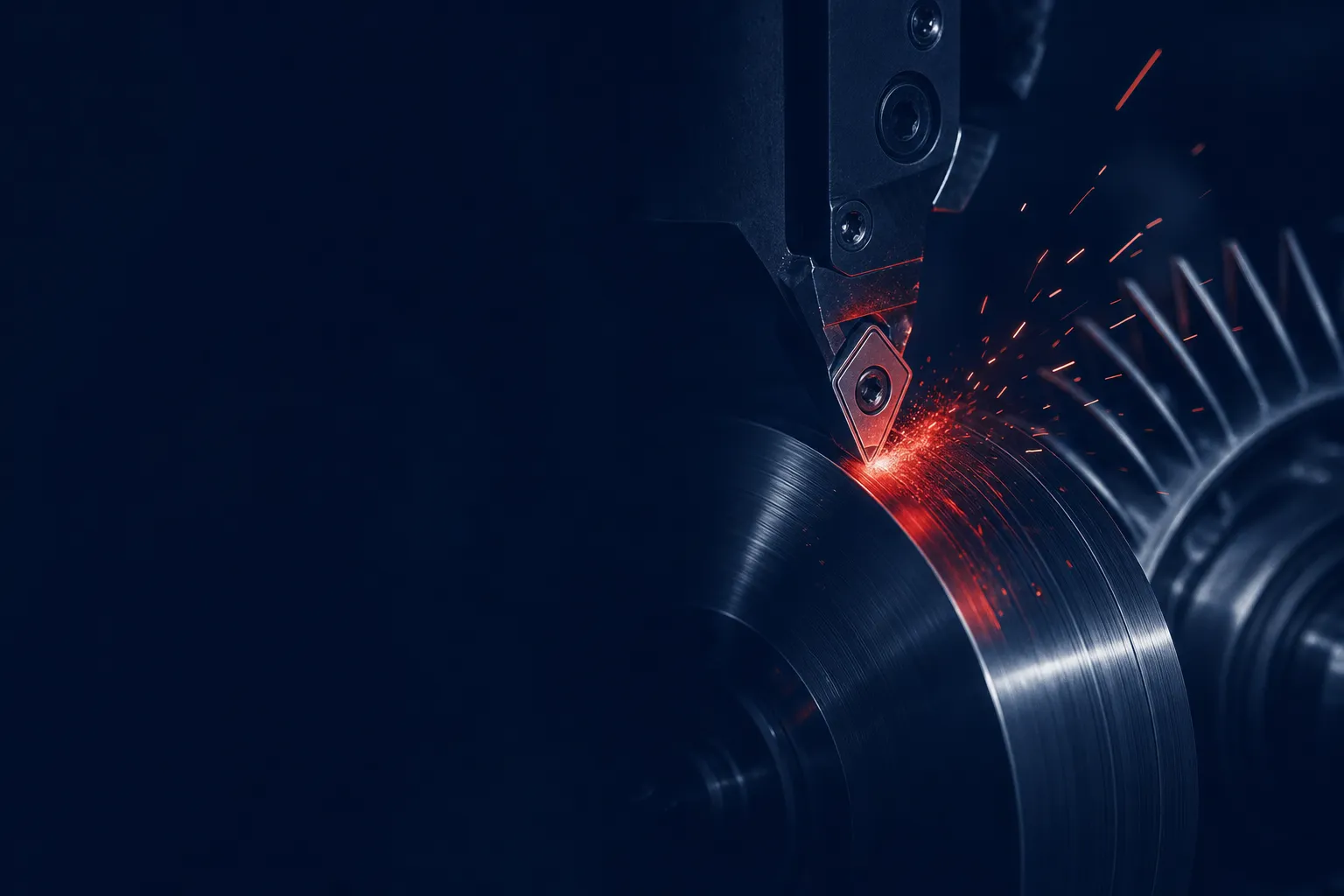
Inconel 718
Inconel 718 (UNS N07718)
Nickel superalloy that holds strength up to 700°C. The standard for jet-engine hot-section parts, gas turbines, and high-pressure energy applications.
- Jet engines
- Gas turbines
- Energy
- Cryogenic
Pure copper
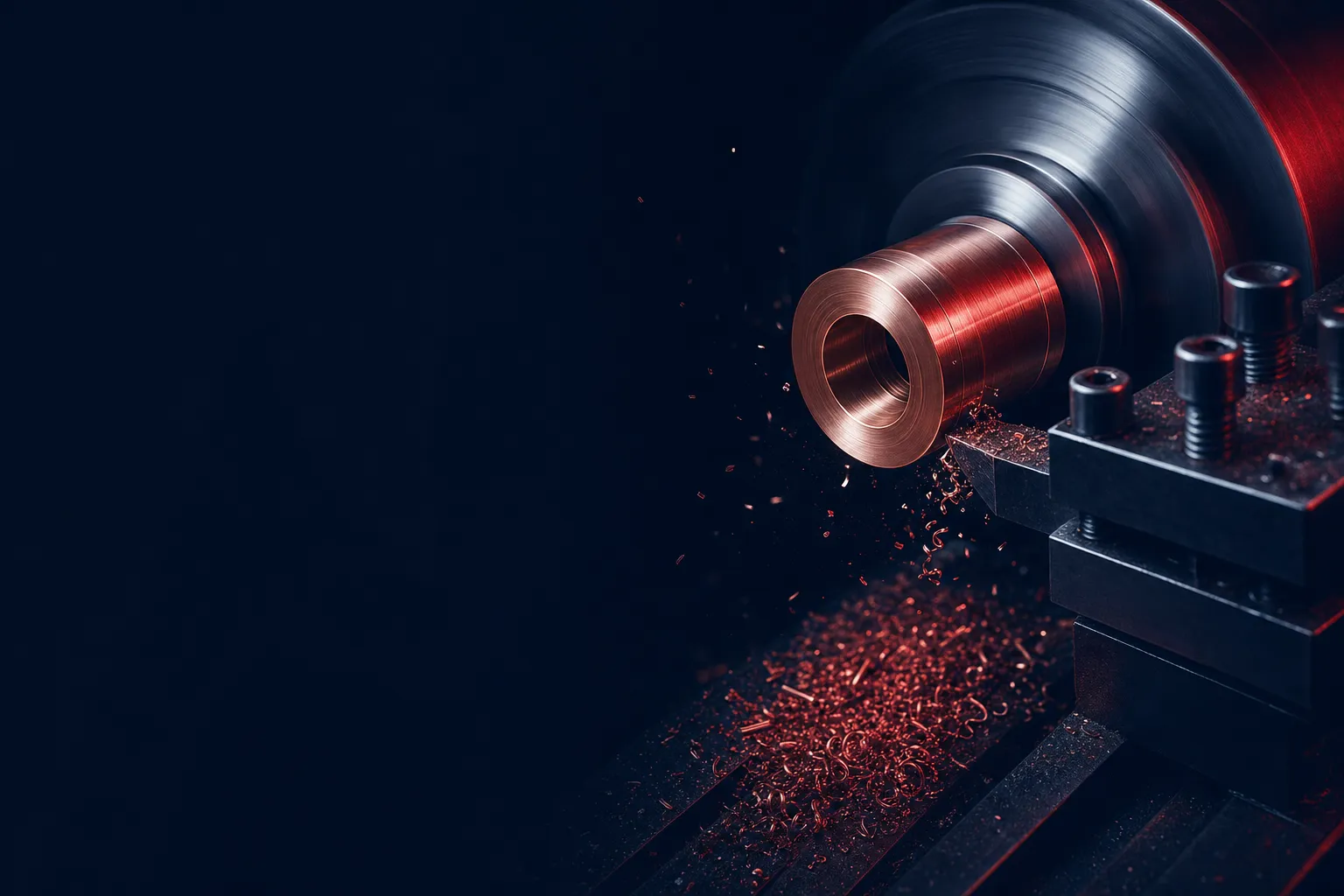
C110 Copper
Electrolytic Tough Pitch Copper (UNS C11000)
100% IACS conductivity reference standard. Bus bars, electrical contacts, RF housings, heat sinks — anywhere current or heat needs to flow.
- Electrical
- RF / microwave
- Thermal mgmt
Bearing bronze
C932 Bronze
Bearing Bronze SAE 660 (UNS C93200)
The bushing-and-bearing default. Self-lubricating, anti-galling against steel, marine-corrosion resistant. Pumps, valves, marine hardware.
- Bushings
- Valve guides
- Marine
Cu-Be alloy
BeCu C172
Beryllium Copper (UNS C17200)
Strongest copper alloy. Conductivity + spring + non-sparking + EDM electrode. Special handling required for beryllium dust.
- Springs
- EDM electrodes
- Non-sparking tools
Free-machining brass
Brass C360
Free-Cutting Brass (UNS C36000)
The screw-machine standard. Lead inclusions break chips for fastest cutting. Fittings, valves, fasteners, plumbing hardware.
- Screw machine
- Fittings
- Plumbing
Magnesium
Magnesium AZ31
Magnesium Alloy AZ31B (UNS M11311)
Lightest commonly-machined structural metal. Excellent damping. Aerospace, electronics, optics. Fire-safe machining required.
- Aerospace lightweight
- Electronics
- Racing
Nickel superalloy
Hastelloy C-276
Ni-Cr-Mo-W Superalloy (UNS N10276)
The corrosion-resistance king. Survives reducing acids, chlorides, sour gas, hot caustic. Chemical processing, scrubbers, sour gas wells.
- Chemical proc.
- Pollution control
- Sour gas
Nickel alloy
Monel 400
Ni-Cu Alloy (UNS N04400)
Nickel-copper alloy bridging stainless and Hastelloy. Marine, HF acid, reducing media. Pump shafts, propellers, naval hardware.
- Marine
- Chemical
- Naval
- Oil & gas
Engineering plastic
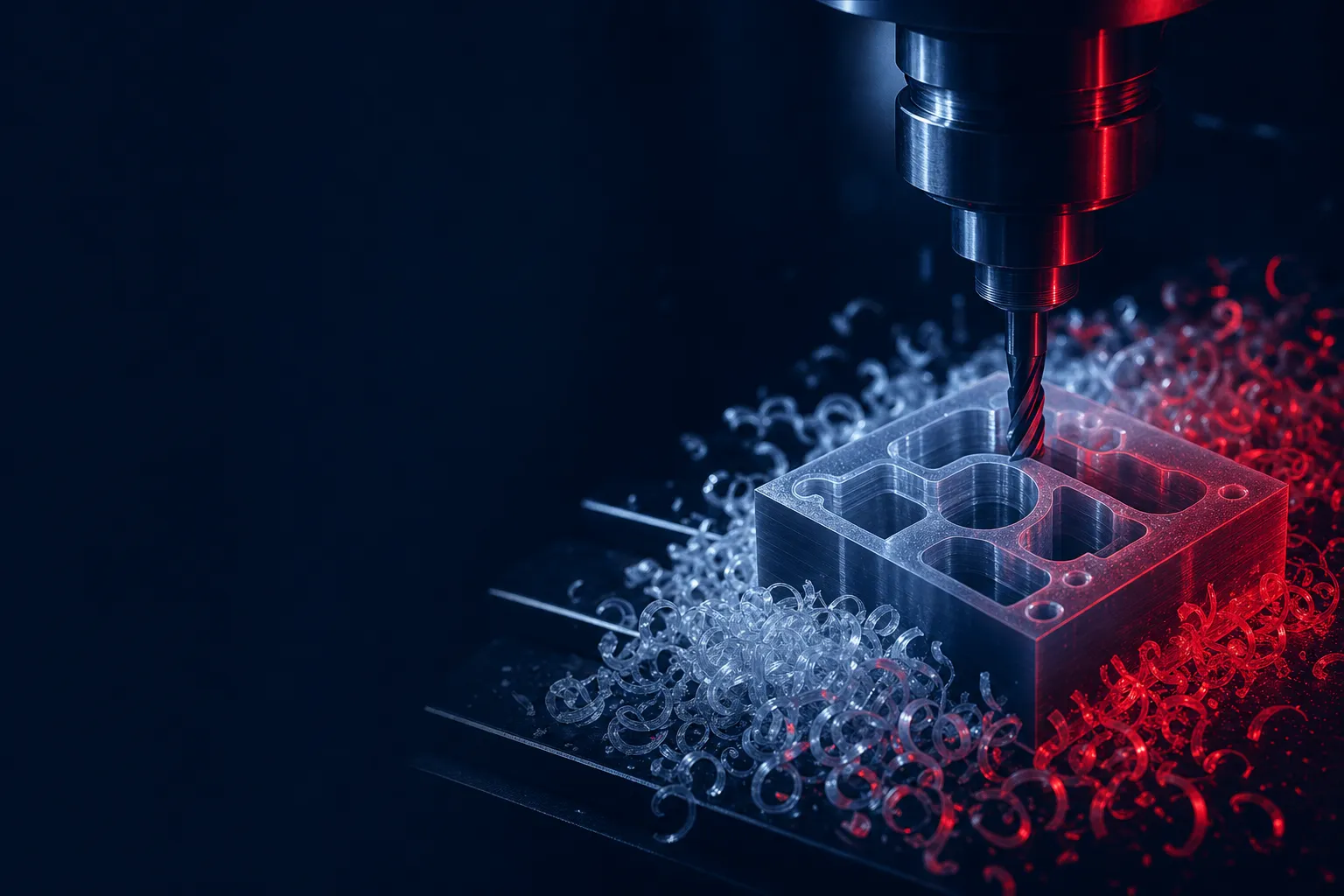
Delrin / POM
Acetal Homopolymer (Polyoxymethylene)
The general-purpose engineering plastic. Strong, stiff, low-friction, easy to machine. Gears, bushings, snap-fits, valves, wear parts.
- Gears
- Bushings
- Fluid handling
Engineering plastic
Ultem (PEI)
PolyEtherImide (Sabic Ultem 1000)
Amber transparent high-temp plastic. FAR 25.853 aircraft cabin compliant, sterilizable, low outgassing. Aerospace interiors, semi handlers.
- Aircraft interiors
- Semiconductor
- Sterilizable medical
Engineering plastic
PEEK
PolyEtherEtherKetone (Victrex 450G)
Premium engineering thermoplastic. Continuous service to 250 °C, biocompatible, chemical-resistant. The non-metal answer for harsh environments.
- Aerospace seals
- Medical implants
- Semiconductor
- Oil & gas
Don’t see your material? For additional alloys, confirm stock availability, process suitability and production scope before quoting. Reach out for specifics.
Pricing: typical Q1 2026 stock costs per lb, mid-quantity bar/plate. Real prices vary with mill, lot size, certification (CMTR, vacuum-melted, aerospace traceable), and market conditions. Use as planning estimates — request formal quotes for production buys.
Need help picking a material?
Tell us about your part and we'll get back to you promptly. Aerospace, medical, defense, and semiconductor production work welcome.Email CAD models and drawings to sales@digitalmachine.com, including ITAR, EAR, CUI and AS9100 work. Keep controlled technical data out of web forms.
First articles through full production runs